The Willpower Trap: Why Environment Design Becomes Your True Focus Engine
Willpower is a cognitive tax that drains under pressure. The solution isn't more discipline—it's designing physical and digital spaces where deep work becomes the path of least resistance.

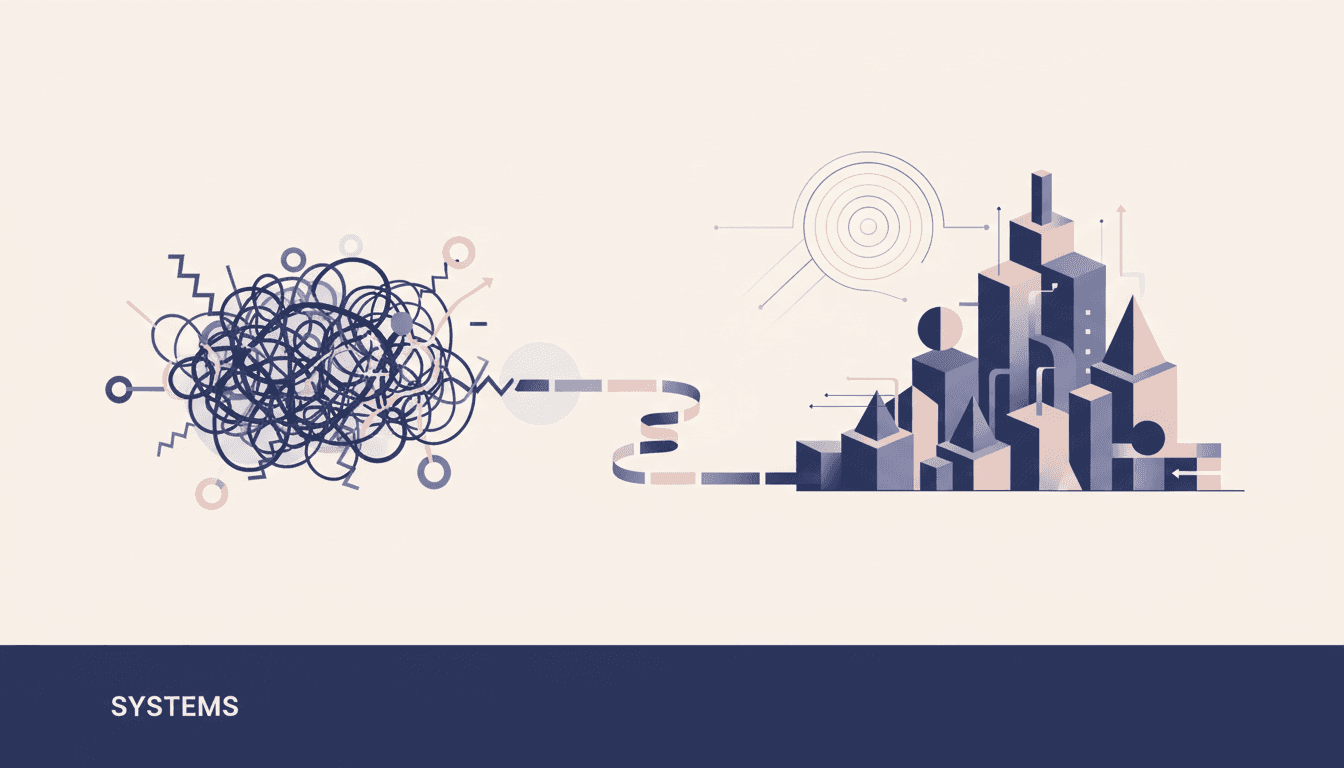
Stanford’s Cognitive Load Theory shows the prefrontal cortex—the seat of willpower—has a hard limit on simultaneous demands. Every decision about whether to work competes for the same neural bandwidth as the work itself. This is why "just try harder" fails when deadlines loom.
Behavioral economist Richard Thaler proved environment shapes decisions more than intention. His nudge theory demonstrates how small design changes—like placing fruit at eye level—can override willpower. The same applies to focus. Cal Newport’s deep work framework depends on this: "The most effective professionals don’t resist distraction—they eliminate it architecturally."
1. The Cognitive Cost of Decision Fatigue
A University of Minnesota study tracked 1,100 decisions per day by knowledge workers. Each micro-choice—"Should I check email now?"—depletes the same mental reserves needed for complex tasks. By afternoon, willpower resembles a drained battery.
Four environmental fixes:
- Default to work: Remove "should I work?" decisions. A physical desk with only worktools (no phones, no browsers) makes starting automatic.
- Pre-commitment devices: Use Lebenmaster’s focus sessions to auto-block distractions before willpower is involved.
- Single-purpose devices: A $100 Chromebook used solely for writing eliminates tab-switching urges.
- Scheduled friction: Deliberately inconvenience distraction. Place your phone in a timed lockbox during work blocks.
2. The Physical Workspace as a Behavioral Script
MIT’s Human Dynamics Lab found productivity spikes 35% when workspaces are designed to minimize "context shifts." Compare two setups:
Weak design:
- Laptop on kitchen table
- Phone within reach
- Browser with 12 tabs
Forced focus design:
- Dedicated desk facing a blank wall
- Ethernet connection (no WiFi toggle temptation)
- Cold Turkey Blocker enforcing app restrictions
The latter removes the need for self-control by making distraction physically harder than focused work. This aligns with behavioral psychologist B.J. Fogg’s maxim: "Make the desired behavior the easiest option."
3. Digital Environments That Outsource Discipline
Apps exploit psychological vulnerabilities by design. Twitter’s infinite scroll and Slack’s red notifications hijack attention through variable rewards—a pattern Skinner’s operant conditioning proved irresistible.
Countermeasures that work:
- Browser compartmentalization: Use separate profiles (Chrome’s "Work" profile with only work bookmarks)
- Network-level blocks: Tools like Freedom or Lebenmaster’s focus sessions enforce rules at the OS level
- Notification deserts: Schedule 4-hour windows where all notifications are disabled at the router
A University of California study found it takes 23 minutes to regain deep focus after an interruption. Environmental design makes these interruptions impossible rather than relying on willpower to ignore them.
4. The Schedule as an Architectural Blueprint
Time-blocking fails when it’s merely a calendar note. It succeeds when the environment enforces it:
- Meeting bans: No calls before noon if you’re a morning deep worker
- Location triggers: Code "library mode" as leaving your desk = work session over
- Energy mapping: Schedule creative work during peak circadian rhythms (for most, 9–11 AM)
Productivity researcher Chris Bailey found that scheduling work during biological peaks reduces reliance on willpower by 62%.
The Lebenmaster Integration
Environment design isn’t about rigidity—it’s about reducing cognitive taxes. Lebenmaster’s habit tracking automates the enforcement of these principles, turning your best intentions into default behaviors. The goal isn’t to resist temptation, but to architect a world where temptation never knocks.
A note on product references — Lebenmaster evolves continuously in response to user feedback and market conditions. Features described in this article may already have changed, been renamed, or been deprecated. Availability of specific capabilities depends on your region, subscription tier, and platform. For the current experience, start a free trial.