Your Brain Has a Bottleneck: Applying Goldratt’s Theory to Personal Output
Manufacturing plants use Theory of Constraints to identify bottlenecks. Your brain works the same way. The constraint isn’t time—it’s your cognitive pipeline.


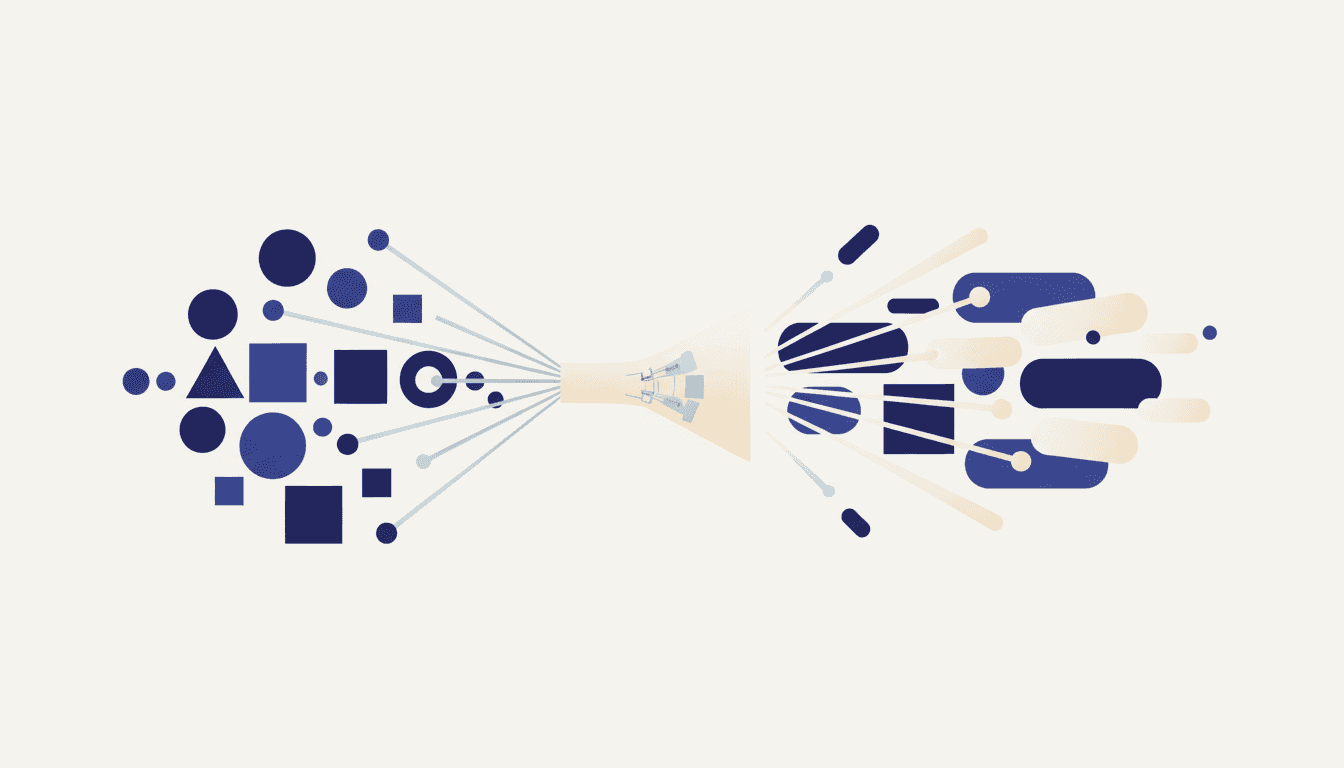
The factory floor and your prefrontal cortex have more in common than you think. Eli Goldratt’s Theory of Constraints—a framework that revolutionized manufacturing—exposes why "working harder" fails. Your brain isn’t a limitless resource; it’s a pipeline with exactly one bottleneck at any given time.
Most productivity advice assumes you need more hours or motivation. The constraint is elsewhere. Just as a factory’s output is limited by its slowest machine, your day’s output is throttled by a single cognitive choke point. Find it, and you’ll double real throughput without adding work hours.
The Five Focusing Steps (But for Your Brain)
Goldratt’s method for factories translates to knowledge work with eerie precision:
- Identify the constraint: The step that limits overall system performance
- Exploit it: Maximize throughput of the constrained resource
- Subordinate everything: Align all other activities to serve the constraint
- Elevate the constraint: Invest in relieving it
- Repeat: Constraints move—your system evolves
Your constraint today might be decision fatigue from morning emails, shallow work fragmentation, or reactive task switching. Until you measure, you’re optimizing the wrong thing.
Cognitive Throughput ≠ Time Management
Time tracking apps lie. They measure activity, not throughput—the rate of valuable output. A developer might log 8 hours but produce zero deployed features because:
- Batch processing failures: Constantly switching between coding and Slack (constraint: attention residue)
- Priority inversion: Urgent bugs overshadowing strategic work (constraint: decision framework)
- Undervalued buffers: No slack for interruptions (constraint: system resilience)
Throughput accounting shows why blocking 2pm-4pm for deep work fails if your real constraint is 9am-10am meeting recovery lag.
The Redundant Capacity Trap
Knowledge workers unconsciously add buffer everywhere except the constraint. Examples:
- Over-researching (non-constraint) while delaying sales calls (actual constraint)
- Perfecting documentation (non-constraint) while avoiding code reviews (actual constraint)
- Checking analytics hourly (non-constraint) while postponing A/B test implementation (actual constraint)
This is why Lebenmaster’s constraint tracking focuses on measuring throughput, not hours. The app forces you to declare what "done" looks like before counting effort.
The Constraint Moves (And That’s Good)
A solved constraint reveals the next one. Typical progression:
- Attention → Noise filtering systems
- Decision quality → Decision journals
- Energy → Ultradian rhythm alignment
- Skill → Deliberate practice scheduling
Case study: A founder switched from 60h weeks to 35h after realizing their constraint was evening decision fatigue. By front-loading strategic choices before noon (when glucose peaks), they shipped more with less time. The constraint then became stakeholder alignment—a higher-class problem.
Goldratt’s framework works because it’s fractal. Apply it daily to tasks, weekly to projects, and quarterly to career arcs. Your current bottleneck is the only thing worth optimizing—everything else is theater.
Most productivity tools add friction. Lebenmaster is designed to help you identify and break constraints systematically, starting with your deepest work sessions. Throughput beats busyness every time.
Further reading:
- Goldratt’s original The Goal (Wikipedia)
- Cognitive pipeline research by Poldrack et al. (PNAS paper)
A note on product references — Lebenmaster evolves continuously in response to user feedback and market conditions. Features described in this article may already have changed, been renamed, or been deprecated. Availability of specific capabilities depends on your region, subscription tier, and platform. For the current experience, start a free trial.