Second Brain or Second Job? The Minimum Viable PKM Stack
Personal knowledge management shouldn't require daily maintenance. This is the leanest system that captures ideas without becoming unpaid administrative work.

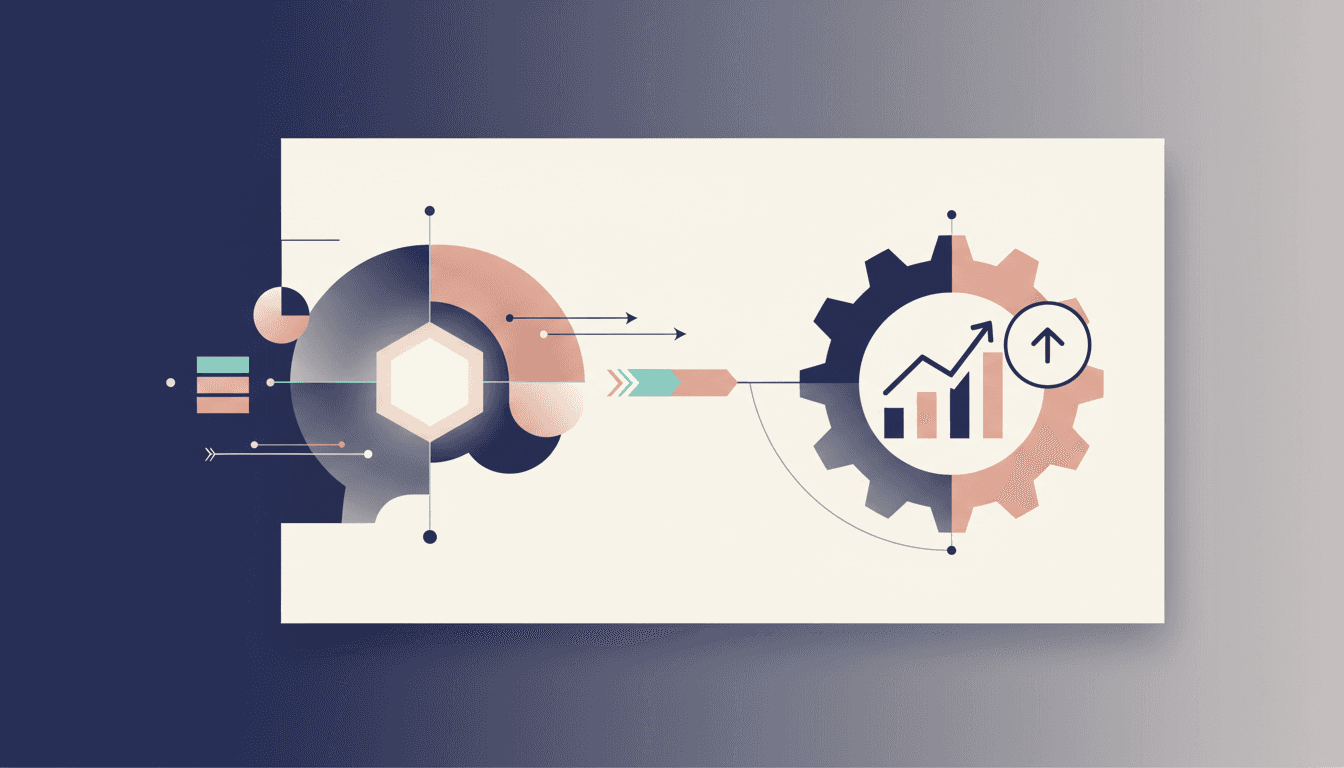
The average knowledge worker spends 3.1 hours per week managing their "second brain" according to a 2023 University of California study. That’s 16% of a 40-hour workweek spent curating notes rather than creating with them. The promise of personal knowledge management (PKM) was never to create a parallel job maintaining digital archives.
PKM works when it operates like your actual brain: capturing ideas unconsciously and retrieving them frictionlessly. The best systems have three traits: they’re interrupt-resistant (no tagging rituals), output-oriented (notes link directly to projects), and self-pruning (unused notes decay). Here’s how to build one.
The 4-Component PKM Stack
-
A single capture layer
Use your existing tools: Apple Notes for spontaneous ideas, a physical notebook for deep work sessions, or Lebenmaster’s quick-capture feature that attaches notes to focus blocks. The key is eliminating decision fatigue about where to put thoughts. -
A weekly distillation habit
Cal Newport’s weekly review works because it’s time-bound. Every Friday, move only the 3–5 most valuable notes from your capture layer to long-term storage. Delete or archive the rest. As Niklas Luhmann proved with his Zettelkasten, quality emerges from ruthless selection. -
Project-bound storage
Notes belong in project folders, not topical databases. A 2022 study in Cognitive Science found that engineers who organized notes by active deliverables had 23% faster retrieval times than those using thematic taxonomies. Your CRM implementation notes go in the CRM project folder—not under “Sales” or “Software.” -
Automatic decay
Use an app like Bear or Obsidian with auto-archiving for notes untouched in 90 days. If you haven’t referenced a note in a quarter, it’s either obsolete or poorly indexed. Let it disappear.
The Capture-to-Output Pipeline
Tiago Forte’s PARA method fails most practitioners because it assumes infinite organizational bandwidth. The alternative is to structure your PKM around concrete outputs:
-
Capture during deep work
Notes emerge naturally during 90-minute focus blocks. A developer writing code might jot API quirks directly in the project’s README file. -
Weekly distillation
Merge related fragments into a maximum of three evergreen notes. A founder might combine scattered pricing strategy thoughts into a single “Monetization Principles” note. -
Quarterly pruning
Archive any evergreen notes not referenced in active projects. Knowledge should earn its keep.
The Note-Taking Addiction Test
You’ve crossed into PKM-as-procrastination if:
- You spend more time tagging notes than using them
- Your “Weekly Review” exceeds 90 minutes
- You’ve researched five note-taking apps this month
- You feel anxious about “losing” unorganized ideas
The fix? Implement a 48-hour rule: if a captured thought hasn’t been distilled into an output within two days, delete it. Important ideas will recur. The rest were mental static.
The Output-Centric Alternative
A venture capitalist client replaced his 12-hour weekly PKM ritual with this three-step system:
- Voice memos during walks for raw ideas
- A single Evernote doc per investment thesis
- Quarterly deletion of unused thesis docs
His deal flow increased 40% because he spent less time cataloging startups and more time meeting them.
Tools like Lebenmaster work because they bake PKM into existing workflows—your notes live where the work happens, not in a separate system demanding maintenance. The best second brain is the one you rarely notice.
The goal isn’t to remember everything, but to forget strategically. When your PKM system disappears into the background, you’ll know it’s working. Start capturing ideas without the overhead.
A note on product references — Lebenmaster evolves continuously in response to user feedback and market conditions. Features described in this article may already have changed, been renamed, or been deprecated. Availability of specific capabilities depends on your region, subscription tier, and platform. For the current experience, start a free trial.