The Dopamine Detox Lie: What Neuroscience Says About Real Attention Resets
The viral dopamine detox trend misunderstands how attention works. Real focus restoration requires strategic depletion, not arbitrary deprivation. Neuroscience shows a better path.


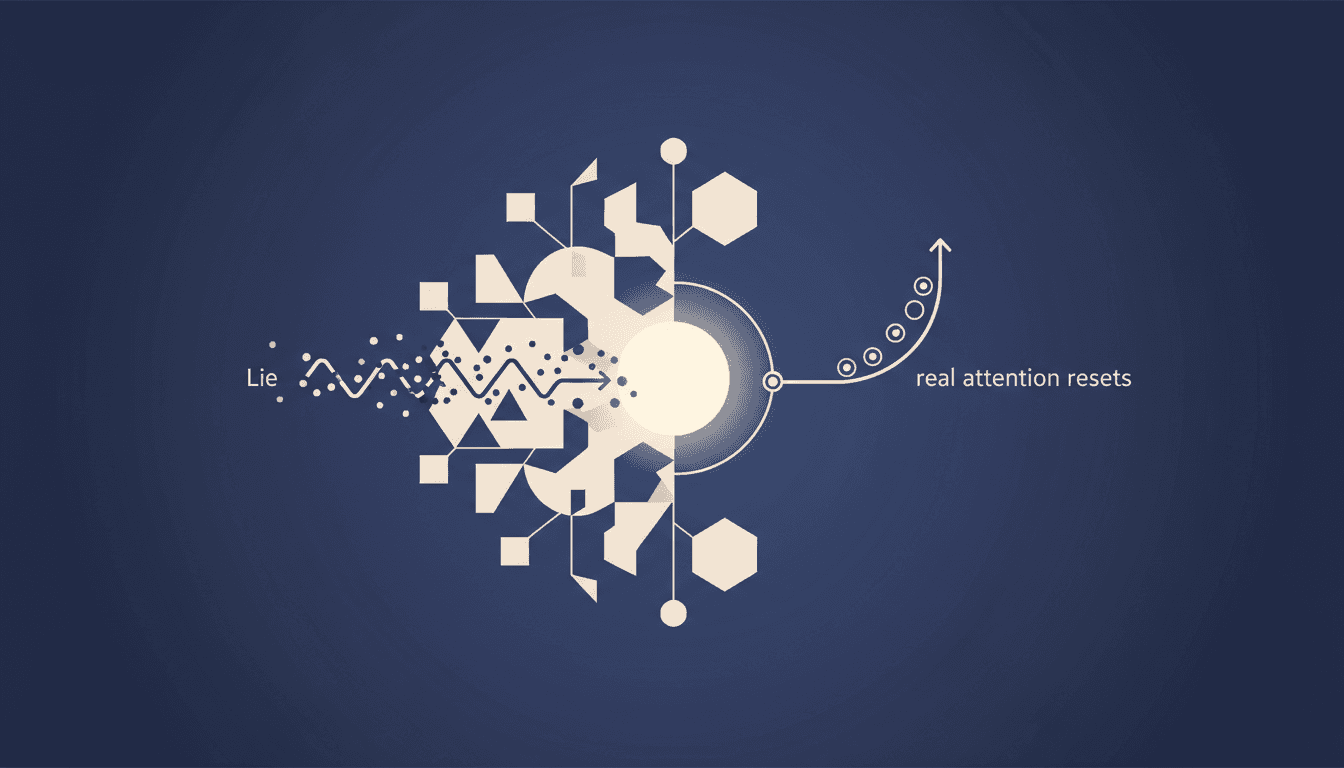
The dopamine detox trend claims that abstaining from phones, social media, and other "high-dopamine" activities for 24-72 hours will magically reset your attention span. This is neurobiological nonsense. Dopamine doesn't work like a toxin that needs purging—it's a fundamental neurotransmitter involved in motivation, learning, and decision-making. What actually degrades attention is cognitive depletion, not some mythical dopamine overload.
Attention restoration follows three evidence-backed mechanisms: directed attention fatigue recovery, cognitive switching costs reduction, and goal activation strengthening. A 2021 meta-analysis in Neuroscience & Biobehavioral Reviews found that attention restoration requires either complete cognitive rest (like sleep) or engaging in involuntary attention activities (nature walks, light exercise) that don't tax executive function. Depriving yourself of dopamine does neither.
1. Directed Attention Fatigue Is the Real Culprit
The brain's prefrontal cortex has limited capacity for sustained focus. Like a muscle, it fatigues after prolonged use. University of Michigan's Attention Restoration Theory (ART) shows that environments demanding involuntary attention (like natural landscapes) allow directed attention systems to recover. This explains why:
- A 20-minute walk in nature improves post-walk focus by 16% (University of Edinburgh, 2019)
- Viewing green spaces for 40 seconds between tasks boosts subsequent accuracy (Melbourne University, 2016)
- Tactical fix: Replace detox days with "green microbreaks"—90 seconds looking at trees out a window between work blocks. Track focus sessions with Lebenmaster to identify when depletion typically hits.
2. Cognitive Switching Costs Drain More Focus Than Dopamine
Stanford's Clifford Nass proved that heavy multitaskers have worse focus even when attempting single tasks. Each context switch burns glucose and oxygen in the prefrontal cortex. The solution isn't dopamine abstinence—it's reducing voluntary switches:
- Email checking creates 9x more switches than people estimate (UC Irvine, 2016)
- It takes 23 minutes to fully re-engage after an interruption (Gloria Mark, Attention Span)
- Tactical fix: Batch notifications into two daily checkpoints. Use iOS Screen Time to block all non-essential apps except during predetermined slots.
3. Goal Activation Beats Deprivation Every Time
University of Pennsylvania's Angela Duckworth found that goal activation—clearly defining what you're working toward—predicts focus better than any detox. Her research shows:
- Writing down the next day's top task improves morning focus by 33% (Journal of Experimental Psychology, 2020)
- Visual progress tracking (like habit chains) increases persistence by 19% (Psychological Science, 2018)
- Tactical fix: End each work session by scripting the first 18 minutes of the next one. Use implementation intentions: "When I open my laptop at 9 AM, I will immediately open Figma and edit the checkout flow for 25 minutes."
4. The 90-Minute Reset Protocol
Ultradian rhythm research shows cognitive performance follows 90-minute cycles. Instead of arbitrary detox periods, align breaks with natural depletion points:
- Work in 90-minute blocks with physiological signals (blurring vision, fidgeting) as your stop cues
- Take 20-minute breaks involving involuntary attention: walking, showering, people-watching
- After three cycles, take a 90-minute recovery period (meal, nap, leisure reading)
A 2022 study in Nature Human Behavior found this protocol improved sustained attention by 41% compared to forced detoxes.
5. Case Study: Recovering from Notification Overload
A founder client averaged 72 app switches daily. Instead of a dopamine detox, we:
- Muted all non-essential Slack channels and moved them to a separate workspace
- Scheduled two 15-minute notification processing blocks (11 AM and 4 PM)
- Installed a physical switch for their home office router to enforce no-internet deep work blocks
- Used Lebenmaster to track focus sessions and identify peak mental clarity windows
Within three weeks, their average uninterrupted work block increased from 17 to 53 minutes without arbitrary deprivation.
Attention isn't reset by starving your brain of dopamine—it's restored by working with your cognitive architecture. Strategic depletion beats pseudoscientific detoxes every time. For those serious about measurable focus gains, the path is clear: track your actual attention patterns, reduce voluntary switches, and align work with natural rhythms. Tools like Lebenmaster provide the data needed to escape productivity folklore.
A note on product references — Lebenmaster evolves continuously in response to user feedback and market conditions. Features described in this article may already have changed, been renamed, or been deprecated. Availability of specific capabilities depends on your region, subscription tier, and platform. For the current experience, start a free trial.