Solo Founder Time Management: The Four Modes of a Founder's Week
Solo founders juggle multiple roles daily. This article breaks down the four essential modes of a founder's week—execution, strategy, maintenance, and recovery—and how to balance them for peak productivity.


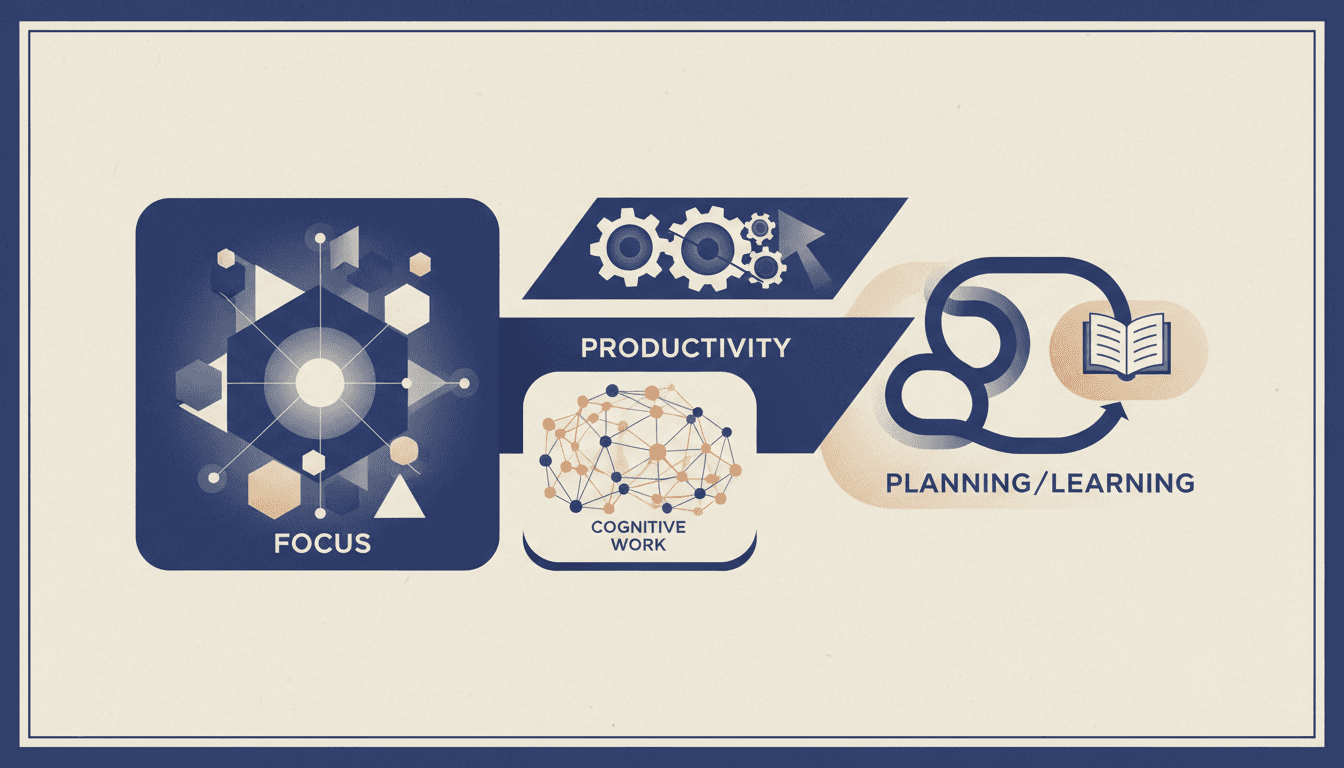
Solo founders wear every hat: CEO, developer, marketer, customer support. This multiplicity of roles creates a unique challenge: how to manage time effectively when you're the entire company. Most founders default to reactive mode, letting the loudest tasks dictate their schedule. This approach leads to burnout and stagnation. Instead, you need a framework to categorize and prioritize your work systematically.
The solution lies in dividing your week into four distinct modes: execution, strategy, maintenance, and recovery. Each mode serves a specific purpose, and neglecting any one of them will cripple your progress. This framework ensures you allocate time to both urgent tasks and long-term growth, while avoiding the trap of perpetual busyness.
Execution Mode: The Engine Room
Execution mode is where the rubber meets the road. This is your deep work phase, where you focus on building, coding, writing, or designing. For solo founders, execution often consumes the bulk of the week—and for good reason. Without tangible output, your startup doesn’t move forward.
Key characteristics of execution mode:
- High focus: No distractions, no meetings. This is your time to enter a flow state.
- Time-blocking: Dedicate chunks of 90–120 minutes to specific tasks, aligning with your ultradian rhythms.
- Output-driven: Measure success by completed features, shipped products, or resolved bugs.
Cal Newport’s Deep Work principles are essential here. Protect your execution time fiercely, and treat interruptions as existential threats to your startup.
Strategy Mode: The Compass
Strategy mode is about stepping back to evaluate your direction. As a solo founder, it’s easy to get lost in the weeds of execution. Without regular strategy sessions, you risk building the wrong product or chasing the wrong market.
What strategy mode looks like:
- Weekly reviews: Dedicate at least 2–3 hours each week to assess progress, adjust goals, and refine your roadmap.
- Market analysis: Research competitors, analyze customer feedback, and identify emerging trends.
- Decision-making: Use frameworks like the Eisenhower Matrix to prioritize tasks that align with your long-term vision.
Neglecting strategy mode is a common pitfall for solo founders. Without it, you’ll end up working harder, not smarter.
Maintenance Mode: The Oil Change
Maintenance mode is the unsexy but essential work that keeps your startup running smoothly. It includes tasks like answering emails, updating documentation, and fixing bugs. While these activities don’t directly drive growth, ignoring them creates friction that slows everything down.
How to handle maintenance mode:
- Batch processing: Group similar tasks together to minimize context switching. For example, dedicate one hour each morning to email and customer support.
- Automation: Use tools like Zapier or Lebenmaster to automate repetitive tasks, freeing up mental bandwidth for higher-value work.
- Delegation: If possible, outsource maintenance tasks to freelancers or virtual assistants.
Maintenance mode isn’t glamorous, but it’s the glue that holds your startup together.
Recovery Mode: The Recharge
Recovery mode is about rest and renewal. Founders often glorify hustle culture, but sustained overwork leads to diminished returns. Recovery isn’t a luxury—it’s a necessity for long-term productivity.
Components of recovery mode:
- Sleep: Prioritize 7–8 hours of quality sleep each night. Sleep deprivation impairs decision-making and creativity.
- Exercise: Physical activity boosts energy levels and reduces stress. Even a 20-minute walk can make a difference.
- Leisure: Engage in hobbies or activities that bring joy and relaxation. This isn’t wasted time—it’s an investment in your mental health.
Recovery mode ensures you’re operating at peak capacity, not running on fumes.
Balancing the Four Modes
The key to effective time management as a solo founder is balance. Over-indexing on any single mode creates inefficiencies. For example, spending all your time in execution mode leads to burnout, while excessive strategy mode results in analysis paralysis.
A balanced weekly schedule might look like this:
- Execution: 60% of your time (e.g., Mon–Wed mornings, Thurs afternoon)
- Strategy: 15% (e.g., Friday morning)
- Maintenance: 15% (e.g., daily 1-hour blocks)
- Recovery: 10% (e.g., evenings, weekends)
Use tools like Lebenmaster to track your time allocation and ensure you’re staying on track. Regular audits of your schedule will help you identify imbalances and adjust accordingly.
Mastering these four modes transforms your week from chaotic to intentional. You’ll ship more code, make better decisions, and avoid burnout—all while building a sustainable startup. Start today by mapping your week into these modes, and watch your productivity soar.
A note on product references — Lebenmaster evolves continuously in response to user feedback and market conditions. Features described in this article may already have changed, been renamed, or been deprecated. Availability of specific capabilities depends on your region, subscription tier, and platform. For the current experience, start a free trial.